
MI in the agricultural sectors
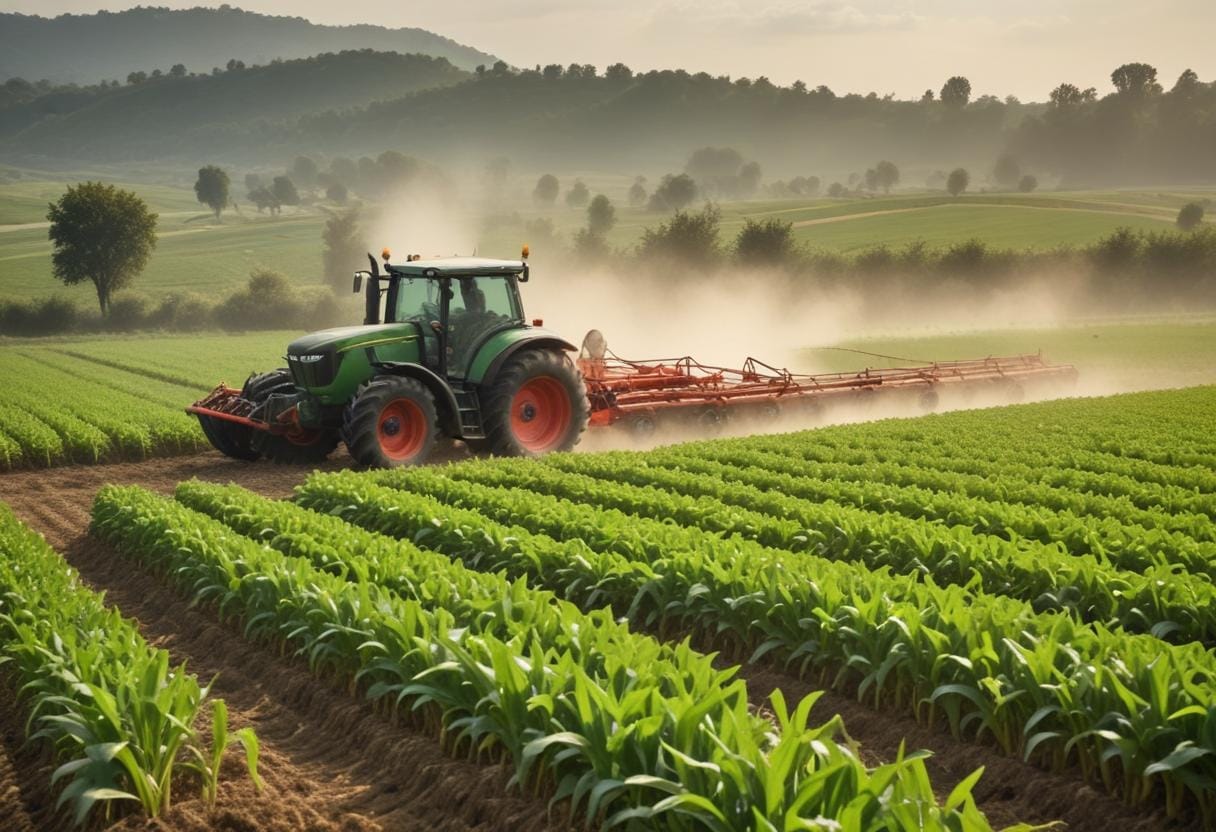
World population growth, projected to reach 10 billion by 2050, will put significant pressure on the agricultural sector to increase crop production and maximise yields.
To address the looming food shortage, two possible approaches are offered: expanding land use and introducing large-scale farming, or using innovative practices and technological advances to increase productivity on existing farmland to boost productivity.
There are many obstacles to achieving the desired agricultural productivity – such as limited land, labour shortages, climate change, environmental problems and declining soil fertility, to name but a few – but modern agriculture is evolving and branching out in different innovative directions.
Agriculture has certainly come a long way since the hand plough or horse-drawn machines.
Each season brings new technologies designed to improve efficiency and harness yields.
However, both individual farmers and global agribusinesses often fail to realize the opportunities that AI in agriculture can offer to their farming practices.
The benefits of AI in agriculture
Until recently, using the words artificial intelligence and agriculture in the same sentence might have seemed an odd combination.
After all, agriculture has been the backbone of human civilisation for thousands of years, providing sustenance and contributing to economic development, while the most primitive artificial intelligence emerged only a few decades ago.
Nevertheless, innovative ideas are emerging in every industry, and agriculture is no exception.
In recent years, the world has witnessed rapid advances in agricultural technology that have revolutionised farming practices.
These innovations are becoming increasingly important as global challenges such as climate change, population growth and resource scarcity threaten the sustainability of our food system.
The introduction of artificial intelligence will solve many challenges and help reduce many of the disadvantages of conventional farming.
Data-based decisions
The modern world is all about data.
Organisations in the agricultural sector are using data to gain granular insights into every detail of the farming process, from understanding every hectare of arable land to tracking the entire supply chain to obtaining in-depth inputs on the process of yield production.
AI-based predictive analytics is already making its way into agribusiness.
Farmers can use AI to collect more data and process it in less time.
In addition, AI can analyse market demand, forecast prices and determine the optimal time to sow and harvest.
Artificial intelligence in agriculture can help explore soil health to gather insights, monitor weather conditions and make recommendations for fertiliser and pesticide applications.
Farm management software increases production along with profitability, allowing farmers to make better decisions at every stage of the crop production process.